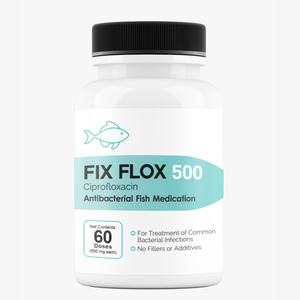
Fish Flox
Fish Flox (Ciprofloxacin) – Aquarium Fish Antibiotics
Fish Flox contains ciprofloxacin, a fluoroquinolone antibiotic widely used in ornamental and aquarium fish to help manage gram-negative bacterial infections. Ciprofloxacin works by inhibiting bacterial DNA replication, preventing harmful bacteria from multiplying and spreading within the aquatic environment.
This category includes Fish Flox products available in multiple strengths and capsule counts, allowing aquarists to select the appropriate option based on tank size and treatment setup.
Common aquarium conditions Fish Flox is used for
- Columnaris (cotton wool disease) caused by gram-negative bacteria
- Septicemia and systemic bacterial infections
- Bacterial gill disease
- Ulcers and hemorrhagic lesions
- Advanced fin rot associated with gram-negative pathogens
General aquarium use guidance
Before initiating antibiotic treatment, confirm stable water quality. Elevated ammonia or nitrite levels can cause symptoms that resemble bacterial disease. Many aquarists prefer using a hospital or quarantine tank to help protect beneficial bacteria in the main aquarium.
Remove activated carbon during treatment to prevent medication absorption. Maintain adequate aeration and monitor fish behavior throughout the treatment period.
Important Notice: These products are intended for fish use only. Not for human consumption. Not for fish intended for human consumption.
FAQ – Fish Flox (Ciprofloxacin) for Aquarium Fish
What is Fish Flox used for?
Fish Flox contains ciprofloxacin, commonly used to help manage gram-negative bacterial infections in aquarium fish, including columnaris, septicemia, and gill disease.
Is Fish Flox suitable for freshwater and saltwater aquariums?
Yes, Fish Flox is commonly used in both freshwater and marine systems when managing bacterial infections.
What makes ciprofloxacin different from other fish antibiotics?
Ciprofloxacin is especially effective against many gram-negative bacteria, which are often responsible for severe or systemic infections in fish.
Will Fish Flox affect beneficial bacteria?
Like most antibiotics, ciprofloxacin may impact biological filtration. Monitoring ammonia and nitrite levels during treatment is recommended.
What if symptoms do not improve?
If no improvement occurs during treatment, reassess the diagnosis. Some conditions may be fungal, parasitic, or related to environmental stress rather than bacterial infection.