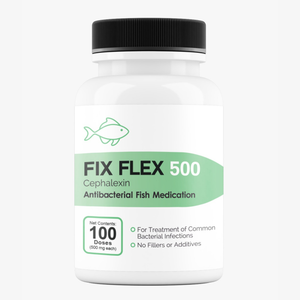
Fish Flex
Fish Flex (Cephalexin) – Aquarium Fish Antibiotics
Fish Flex is a cephalexin-based fish antibiotic used in ornamental and aquarium fish to help manage bacterial infections. Cephalexin is a first-generation cephalosporin antibiotic that works by interfering with bacterial cell wall synthesis, helping limit the spread of susceptible bacteria within the aquarium environment.
This category includes Fish Flex options by strength (250 mg and 500 mg) and capsule count, allowing aquarists to choose the most appropriate format based on tank size and treatment setup.
Common aquarium conditions Fish Flex is used for
- Fin and tail rot caused by bacterial pathogens
- Mouth rot and cotton-like bacterial lesions
- Skin ulcers and open sores
- Gill disease and bacterial irritation
- Localized gram-positive bacterial infections
General aquarium use guidance
Before starting antibiotic treatment, confirm that water parameters (ammonia, nitrite, nitrate, temperature) are stable. Poor water quality can mimic signs of infection. Many aquarists prefer using a quarantine or hospital tank to help protect beneficial bacteria in the main aquarium.
Remove activated carbon during treatment, as it can absorb medication. Monitor fish closely for behavioral changes and maintain strong aeration throughout the course.
Important Notice: These products are intended for fish use only. Not for human consumption. Not for fish intended for human consumption.
FAQ – Fish Flex (Cephalexin) for Aquarium Fish
What is Fish Flex used for?
Fish Flex contains cephalexin, commonly used to help manage bacterial infections in aquarium fish, including fin rot, skin lesions, and gill disease.
Is Fish Flex suitable for freshwater and saltwater aquariums?
Yes, Fish Flex is commonly used in both freshwater and marine aquarium systems when managing bacterial infections.
What is the difference between 250 mg and 500 mg?
The difference is the capsule strength. Lower strengths are often selected for smaller tanks or flexible dosing, while higher strengths may be used for larger aquariums.
Will Fish Flex affect beneficial bacteria?
Like most antibiotics, cephalexin may impact beneficial bacteria. Monitoring ammonia and nitrite levels during treatment is recommended.
What if symptoms do not improve?
If there is no improvement during the treatment period, reassess the diagnosis. Some conditions may be fungal, parasitic, or environmental rather than bacterial.